
TECH
droven.io usa tech market updates: The New AI-Focused Tech Signal Platform Readers Are Watching in 2026


The phrase droven.io usa tech market updates is becoming popular because readers want simple, fast, and practical explanations of what is happening inside the American technology market. At the center of this search is Droven.io, an editorial technology platform that describes itself as a source for trusted AI information, tools, guides, and future technology insights, with coverage around artificial intelligence, emerging technology, software development, digital transformation, innovation, and the future of work.
Quick Overview of droven.io usa tech market updates
| Field | Details |
|---|---|
| Main Keyword | droven.io usa tech market updates |
| Website | Droven.io |
| Main Category | AI, technology news, digital transformation, future work |
| Main Audience | Tech readers, founders, developers, business owners, students, marketers |
| Core Focus | USA startups, AI tools, Silicon Valley updates, cloud, automation, cybersecurity |
| Content Type | Editorial articles, guides, explainers, trend updates |
| Best For | Understanding fast-moving USA tech changes in simple language |
| Main Value | Turns complex market shifts into readable insights |
| Important Note | It appears more like a content platform than a SaaS tool |
What Is droven.io usa tech market updates?
droven.io usa tech market updates refers to the kind of technology-focused content readers expect from Droven.io when they search for updates about the United States tech market. This includes news and explainers about artificial intelligence, startups, gadgets, cloud computing, cybersecurity, digital transformation, developer tools, and future-work trends.
Droven.io’s own technology-news category says it covers USA startups, gadgets, Silicon Valley updates, and future tech shaping global innovation. Its artificial-intelligence category also says it covers AI tools, machine learning, automation, generative AI, and innovations shaping the tech world across the USA.
That means the keyword is not just about one article. It represents a wider reader demand: people want to know what is changing in the USA tech market and how those changes may affect jobs, companies, founders, investors, and everyday digital users.
Why Droven.io Is Getting Attention
Droven.io is getting attention because AI and technology news can feel overwhelming. Every week, there are new tools, new funding rounds, new startup launches, new cybersecurity risks, and new business automation trends. Many readers do not want long technical reports. They want quick explanations that make sense.
This is where platforms like Droven.io become useful. They collect and explain technology topics in a way that is easier for non-experts to understand. A founder may use it to follow AI automation ideas. A student may use it to explore future tech careers. A developer may use it to understand software or cloud trends. A business owner may use it to decide whether AI tools are worth adopting.
The search term droven.io usa tech market updates shows that readers are not only looking for news. They are looking for guidance. They want to know which trends are important, which ones are hype, and which ones may shape the next few years.
Why USA Tech Market Updates Matter in 2026
The USA remains one of the most influential technology markets in the world. American companies lead major areas such as artificial intelligence, cloud infrastructure, cybersecurity, enterprise software, semiconductors, robotics, and digital platforms. When the USA tech market moves, global markets often react.
CompTIA’s State of the Tech Workforce 2026 report says the U.S. tech workforce is expected to grow twice as fast as the overall U.S. workforce over the next decade, with replacement demand for tech occupations averaging about 323,000 workers per year from 2026 to 2036. That shows why people are paying close attention to tech-market updates. These changes affect employment, education, business planning, and investment decisions.
The market is also changing because AI is no longer just a future idea. It is becoming part of software development, customer support, marketing, cybersecurity, design, data analytics, and operations. That makes USA tech updates more important for almost every industry.
Droven.io and AI Market Coverage
Artificial intelligence is one of the biggest reasons people search for droven.io usa tech market updates. Droven.io positions itself strongly around AI content, including AI tools, machine learning, automation, generative AI, and business adoption.
This fits the wider market. CB Insights reported that private AI companies raised $226 billion in Q1 2026, surpassing the full-year total for 2025 in just one quarter. That level of funding shows how intense the AI market has become.
For readers, this matters because AI funding often signals where future jobs, tools, startups, and enterprise products may appear. If investors are pouring money into AI infrastructure, agents, automation, robotics, or developer tools, those areas are likely to shape business decisions.
Droven.io-style updates can help readers understand these shifts without needing to read dense venture capital reports every day.
AI Is Changing the USA Business Landscape
AI is no longer limited to big tech labs. Businesses across the USA are using AI for writing, coding, customer service, analytics, sales, security monitoring, workflow automation, and content production.
Gartner’s 2026 strategic technology trends list includes AI-native development platforms, AI supercomputing platforms, multiagent systems, domain-specific language models, physical AI, AI security platforms, and preemptive cybersecurity. These trends show that AI is becoming the foundation of many business technology decisions.
For small businesses, this creates opportunity and pressure. A company that uses AI wisely can move faster, reduce repetitive work, improve customer service, and compete with larger players. But a company that ignores AI may fall behind in speed, cost, and efficiency.
That is why droven.io usa tech market updates is a useful keyword. It connects readers with explanations of the technology shifts that are changing business decisions across America.
USA Startup Trends Covered by Droven.io
Droven.io’s technology-news category highlights USA startups and Silicon Valley updates. This is important because startups often show where the market is moving before large companies fully respond.
In 2026, USA startups are especially active in AI automation, cybersecurity, healthcare technology, developer productivity, enterprise software, fintech, climate tech, robotics, and data infrastructure. The strongest startups are not only creating flashy tools. They are solving real business problems.
For example, a startup may help companies automate customer support. Another may build AI tools for doctors. Another may create better protection against cyberattacks. Another may help developers ship software faster.
Readers follow these updates because today’s small startup can become tomorrow’s major platform. Early awareness helps founders, investors, job seekers, and businesses make smarter moves.
Cloud Computing and Digital Transformation
Cloud computing remains one of the biggest parts of the USA tech market. Droven.io has content connected to cloud computing and digital transformation, including a category focused on automation, AI integration, and big data insights reshaping industries in the USA.
Cloud is important because modern businesses need flexible systems. They need to store data, run apps, connect teams, analyze customer behavior, and scale quickly. AI also depends heavily on cloud infrastructure because training and running advanced models requires major computing power.
Digital transformation is no longer just a corporate phrase. It means real changes: replacing manual processes, moving data to smarter systems, using automation, improving cybersecurity, and creating better customer experiences.
For readers of droven.io usa tech market updates, cloud and transformation topics are valuable because they show how technology becomes practical inside real businesses.
Cybersecurity Is Now a Boardroom Issue
Cybersecurity has become one of the most important parts of the USA tech market. As companies adopt AI, cloud tools, remote work systems, and connected devices, security risks increase.
Gartner predicts that by 2028, more than 50% of enterprises will use AI security platforms to protect AI investments, including against risks such as prompt injection, data leakage, and rogue agent actions. CrowdStrike’s 2026 threat report also describes AI as a dual threat because it can help attackers scale attacks while also creating new attack surfaces for defenders to secure.
This means cybersecurity is no longer only an IT department problem. It is a leadership issue. Business owners, executives, and investors need to understand security risks before adopting new tools.
Droven.io-style market updates can help explain these risks in simple language, especially for readers who are not cybersecurity experts.
Tech Jobs and Future Careers in the USA
One of the most useful parts of droven.io usa tech market updates is career awareness. Droven.io has a future-of-work category covering AI jobs, freelancing tools, USA startups, and innovation trends driving digital careers.
The USA tech job market is changing. Traditional roles such as software engineer, cloud engineer, data analyst, and cybersecurity analyst remain important. But new roles are also growing around AI operations, prompt engineering, AI governance, automation consulting, model evaluation, data infrastructure, and AI security.
CompTIA estimates net U.S. tech employment will grow by 1.9% in 2026, creating about 185,499 new jobs and increasing the national tech labor force to nearly 9.8 million workers.
For students and job seekers, this matters. The best career strategy is not only to learn one tool. It is to understand where the market is going and build skills around durable trends.
Why Businesses Follow USA Tech Updates
Businesses follow USA tech updates because technology decisions affect money, speed, hiring, customer experience, and survival. A company that understands AI automation may reduce manual work. A company that follows cybersecurity trends may avoid expensive breaches. A company that tracks cloud updates may scale faster.
The challenge is that technology moves quickly. Business owners often do not have time to read technical white papers or investor reports. They need practical summaries.
That is why platforms like Droven.io can attract attention. They sit between expert-level research and casual news. They explain what is happening and why it matters.
For business readers, droven.io usa tech market updates can act like a signal source. It helps them see which topics deserve attention before competitors move first.
Is Droven.io a SaaS Tool or an Editorial Platform?
Based on its public description, Droven.io appears primarily to be an editorial platform, not a SaaS product that users log into for workflow automation. Its homepage describes it as a platform publishing content on AI, technology, software development, digital transformation, innovation, and the future of work.
This distinction is important. Some online articles describe Droven.io in ways that may sound like a software tool or automation product. But the official website description focuses more on publishing guides, insights, and educational content.
So, readers should understand Droven.io as a tech-information website first. It may discuss tools, markets, and automation, but users should not assume it is a full software platform unless the website clearly offers those features.
Main Topics Readers Can Expect
Readers searching droven.io usa tech market updates can expect content around several major themes.
The first theme is artificial intelligence. This includes generative AI, AI tools, automation, machine learning, and business use cases.
The second theme is startups and innovation. This includes Silicon Valley updates, emerging companies, venture-backed tools, and future technology ideas.
The third theme is cloud and digital transformation. This includes how businesses modernize systems, use data, and improve operations.
The fourth theme is cybersecurity. This includes AI security, data protection, threat trends, and risk management.
The fifth theme is future careers. This includes AI jobs, freelancing, remote work, developer tools, and new tech skills.
Together, these topics make Droven.io relevant for readers who want a broad understanding of the USA tech market.
How Droven.io Can Help Developers
Developers need more than coding skills in 2026. They need to understand AI coding tools, cloud workflows, DevOps, cybersecurity, APIs, data pipelines, and automation platforms.
Droven.io’s content around software development, AI tools, and technology guides can help developers stay aware of these shifts. A developer who follows market updates can better choose what to learn next.
For example, if AI-native development platforms become more common, developers may need to learn how to work with AI-assisted coding environments. If cybersecurity grows around AI systems, developers may need to understand secure model deployment and data protection. If cloud costs rise, developers may need to build more efficient systems.
The strongest developers are not only good at writing code. They understand the business and market context around the code.
How Droven.io Can Help Founders
Founders can use droven.io usa tech market updates to understand what investors, customers, and competitors are watching. A founder building a startup needs to know which markets are growing and which problems are worth solving.
If AI funding is rising, founders can look for gaps in AI implementation, compliance, security, or vertical-specific tools. If cybersecurity risks are increasing, founders can build products that help businesses protect data and systems. If digital transformation remains strong, founders can create tools that help old industries modernize.
Market updates do not replace deep research, but they help founders notice patterns early. That early awareness can lead to better product ideas and smarter positioning.
How Droven.io Can Help Students and Job Seekers
Students and job seekers can use Droven.io-style updates to choose better learning paths. Instead of guessing which skill to study, they can follow market trends and see where demand is growing.
For example, AI, cloud computing, cybersecurity, data analytics, and automation are all important areas. But the best choice depends on a person’s interest and career goals.
A student who enjoys problem-solving may explore cybersecurity. A creative person may explore AI content tools or product design. A technical learner may choose cloud engineering or machine learning. A business-minded person may study AI strategy, operations, or digital transformation.
Following droven.io usa tech market updates can help readers connect education with real market demand.
The Future of USA Tech Market Updates
USA tech market updates will become even more important because technology is moving faster than traditional education and business planning cycles. AI tools change monthly. Startups appear quickly. Cyber risks evolve constantly. Cloud platforms release new features. Job requirements shift.
This speed creates opportunity for readers who stay informed. It also creates risk for people who ignore change.
In the future, the best tech-update platforms will not only report news. They will explain meaning. They will help readers understand what matters, what is hype, what is risky, and what deserves action.
Droven.io’s focus on AI, emerging tech, digital transformation, and future work places it inside that growing demand.
Common Misconceptions About droven.io usa tech market updates
One common misconception is that droven.io usa tech market updates refers only to breaking news. In reality, it can include guides, explainers, trend analysis, tool coverage, and business insights.
Another misconception is that Droven.io is clearly a SaaS automation product. Its public description presents it more as an editorial AI and technology information platform.
A third misconception is that tech-market updates are only useful for developers. They are useful for founders, marketers, students, investors, business owners, freelancers, and anyone affected by digital change.
A fourth misconception is that every tech trend deserves immediate action. Some trends are strong, while others are hype. Good market updates should help readers tell the difference.
FAQs About droven.io usa tech market updates
What is droven.io usa tech market updates?
droven.io usa tech market updates refers to technology-focused updates and insights connected to Droven.io’s coverage of AI, USA startups, gadgets, Silicon Valley updates, digital transformation, cloud, cybersecurity, and future work.
What is Droven.io?
Droven.io is an editorial technology platform that publishes content about artificial intelligence, emerging technology, software development, digital transformation, innovation, and the future of work.
Does Droven.io cover USA startups?
Yes. Droven.io’s technology-news category describes its coverage as including USA startups, gadgets, Silicon Valley updates, and future tech shaping global innovation.
Is Droven.io mainly about AI?
AI is one of Droven.io’s strongest themes. Its artificial-intelligence category covers AI tools, machine learning, automation, generative AI, and innovations shaping the tech world across the USA.
Why are USA tech market updates important?
They help readers understand changes in AI, cloud computing, cybersecurity, jobs, startups, digital transformation, and business technology adoption.
Is Droven.io useful for job seekers?
Yes, it can be useful for job seekers who want to follow AI jobs, freelancing tools, startup trends, and future-work topics. Droven.io has a future-of-work category focused on these areas.
Is Droven.io a software tool?
Based on its public website description, Droven.io appears more like an editorial content platform than a SaaS product.
What USA tech trends matter most in 2026?
Major trends include AI-native development, AI security, multiagent systems, cybersecurity, cloud modernization, automation, digital transformation, and emerging tech jobs.
Final Thoughts on droven.io usa tech market updates
droven.io usa tech market updates is a valuable search topic because it connects readers with one of the most important questions in 2026: what is really happening in the American technology market?
Droven.io appears to serve readers who want clear explanations of AI, startups, cloud, cybersecurity, digital transformation, software development, and future careers. Its value comes from making complex topics easier to understand.
The USA tech market is changing quickly. AI investment is massive, cybersecurity risks are rising, cloud systems are evolving, and tech jobs are shifting toward new skills. Readers who follow these updates can make better decisions about careers, business strategy, tools, and innovation.
For anyone trying to stay ahead, droven.io usa tech market updates is more than a keyword. It is a signal that people want practical, understandable technology insight in a market where change never slows down.
Visit for more info: prestigemagazine.co.uk
TECH
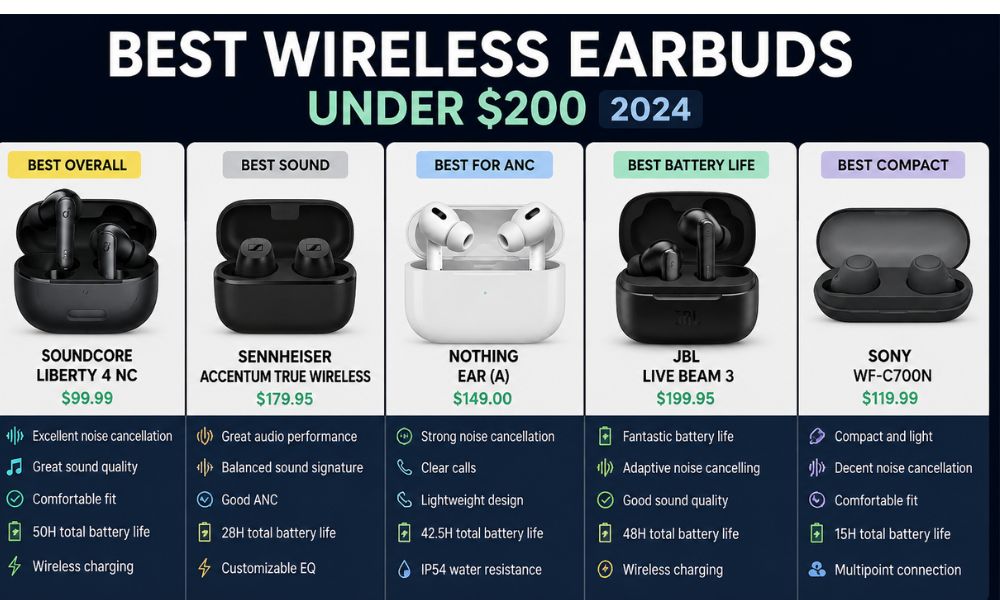
Best Wireless Earbuds Under 200 Dollars 2024: Top Picks for Sound, ANC, Battery, and Everyday Value

url encoder spellmistake is a search phrase people may use when they are looking for the correct spelling of “URL encoder” or trying to understand why a website link looks broken after encoding. The correct technical term is usually URL encoding or percent-encoding, which means converting unsafe or special characters in a URL into a safe format, such as changing a space into %20. MDN explains that percent-encoding is also called URL encoding and uses a percent sign followed by hexadecimal characters to represent certain values. (MDN Web Docs)
Quick Answer Table
| Question | Answer |
|---|---|
| Correct spelling | URL encoder |
| Common wrong spelling | URL encorder, URL enconder, URL encoder spellmistake |
| Technical term | URL encoding or percent-encoding |
| Example | hello world becomes hello%20world |
| Used for | URLs, query strings, form data, API links |
| Main purpose | To make links safe and readable by browsers/servers |
| Common mistake | Encoding the full URL instead of only the parameter |
| Best practice | Encode only the part that needs encoding |
What Does URL Encoder Spellmistake Mean?
The phrase url encoder spellmistake is not a standard technical term. It looks like a keyword made from two ideas: “URL encoder” and “spelling mistake.” In simple words, the user may be asking for the correct spelling of URL encoder or may be searching for help with a URL encoding error.
The correct phrase is URL encoder if you mean a tool that converts text into URL-safe format. The process itself is called URL encoding. Developers may also call it percent-encoding because encoded characters often begin with the percent symbol %.
For example, a normal space is not safe inside many URL situations, so it may become %20. A question mark, ampersand, slash, equal sign, hashtag, and other special characters can also create problems if they are used in the wrong part of a URL.
Correct Spelling of URL Encoder
The correct spelling is:
URL encoder
It is not usually written as:
URL encorder
URL enconder
URL incoder
URL encoder spellmistake
URL encodeer
The word “encoder” comes from “encode,” meaning to convert information into another format. So a URL encoder is a tool that converts normal text into a format that can safely be used inside a web address.
The opposite tool is called a URL decoder. A decoder changes encoded text back into readable text. For example, it can turn %20 back into a space.
What Is URL Encoding?
URL encoding is the process of changing special characters into a format that browsers and servers can understand safely. URLs have rules. Some characters have special meaning inside a link, and if they are used incorrectly, they can break the link.
For example, this text:
best shoes for men
may become:
best%20shoes%20for%20men
That happens because spaces are not normally used directly in URLs. They are encoded as %20.
Another example:
Tom & Jerry
may become:
Tom%20%26%20Jerry
Here, the ampersand & becomes %26 because & has a special meaning in query strings. If it is not encoded, the server may think it separates two different parameters.
Why URL Encoding Is Important
URL encoding is important because it prevents confusion in web addresses. A URL is not just normal text. It has structure. It may contain a protocol, domain, path, query string, parameters, and fragments.
For example:
https://example.com/search?q=best shoes
This URL includes a search query. If the query contains spaces or special characters, it may not work properly unless those characters are encoded.
A clean encoded version may look like:
https://example.com/search?q=best%20shoes
This helps browsers, servers, APIs, and search tools understand the URL correctly.
Common URL Encoder Spell Mistakes
Many people make spelling mistakes when searching for URL encoding tools. Some common versions include:
url encorder
url enconder
url encoder spellmistake
url spelling encoder
url encode spelling mistake
url endcoder
url decoder encoder mistake
These mistakes are normal because “encoder” is a technical word. People who are not developers may not know the exact spelling. Search engines usually understand the intent and show URL encoder tools anyway.
For an SEO article, using the phrase url encoder spellmistake can help target users who search with incorrect wording, while the article should still explain the correct term clearly.
URL Encoder vs URL Decoder
A URL encoder converts normal text into encoded text.
Example:
hello world
becomes:
hello%20world
A URL decoder converts encoded text back into normal readable text.
Example:
hello%20world
becomes:
hello world
Both tools are useful. Developers, bloggers, SEO workers, and website owners use them when handling links, tracking URLs, query parameters, affiliate links, and API requests.
URL Encoding Example
Here is a simple example.
Original text:
best laptop under $500
Encoded text:
best%20laptop%20under%20%24500
In this example:
The space becomes %20.
The dollar sign $ becomes %24.
This encoded version is safer to use in a URL query or parameter.
Another example:
Original:
name=John & city=New York
Encoded:
name%3DJohn%20%26%20city%3DNew%20York
The equal sign = becomes %3D.
The ampersand & becomes %26.
The space becomes %20.
Common URL Encoding Mistakes
One of the biggest mistakes is encoding the entire URL when only one part should be encoded.
For example, this full URL:
https://example.com/search?q=best shoes
should not always be fully encoded. If the whole thing is encoded, it may become unreadable as a working link.
A better method is to encode only the query value:
best shoes
into:
best%20shoes
Then place it inside the URL:
https://example.com/search?q=best%20shoes
This keeps the main URL structure correct.
Encoding Full URL vs Encoding URL Component
There is a big difference between encoding a full URL and encoding a URL component.
A full URL includes:
https://example.com/search?q=best shoes
A URL component may only be:
best shoes
If you encode the full URL incorrectly, important symbols like :, /, ?, and = may also be changed. That can break the URL.
In JavaScript, developers often use encodeURI() for a full URL and encodeURIComponent() for a single part of a URL, such as a query parameter. MDN explains that encodeURIComponent() encodes more characters than encodeURI(), including characters that are part of URI syntax. (MDN Web Docs)
Why Spaces Become %20
Spaces are one of the most common reasons people use a URL encoder. A browser cannot always safely use a normal space inside a URL, so the space is converted into %20.
Example:
my file.pdf
becomes:
my%20file.pdf
This is why file links, image URLs, and search query URLs often contain %20.
Sometimes, in form submissions or certain query strings, a space may appear as a plus sign +. But %20 is the common encoded form seen in many URL contexts.
What Does the Percent Sign Mean?
The percent sign % tells the browser that the next two characters are part of an encoded value.
For example:
%20
means a space.
%2F
means /.
%3F
means ?.
%26
means &.
%3D
means =.
These encoded values help keep the URL structure safe. Without encoding, a character like & could accidentally split a query string into multiple parameters.
URL Encoding and SEO
URL encoding can affect SEO because search engines need to crawl and understand URLs correctly. A broken URL can create indexing problems, redirect issues, duplicate URLs, or bad user experience.
For SEO, clean URLs are usually better. A readable URL like:
example.com/best-laptops
is better than a messy one like:
example.com/page?id=best%20laptops%20%26%20cheap%20deals
However, encoded characters are sometimes necessary. If a URL contains special characters, product filters, search queries, or tracking parameters, encoding helps keep the link functional.
Should You Use Encoded URLs in Blog Posts?
You can use encoded URLs when needed, but you should keep blog URLs simple whenever possible.
For article slugs, use clean words and hyphens:
Good:
/url-encoder-spellmistake/
Bad:
/url%20encoder%20spellmistake/
For SEO-friendly URLs, avoid spaces, unnecessary symbols, long query strings, and special characters. Use lowercase letters and hyphens for readability.
The keyword url encoder spellmistake can be used in the title, headings, and content, but the actual URL slug should be cleaner, such as:
url-encoder-spellmistake
Why URL Encoder Tools Are Useful
URL encoder tools are useful for people who work with websites, APIs, links, forms, and SEO campaigns. They help convert unsafe characters into a format that will not break the URL.
A URL encoder is helpful when you are working with:
Search query links
Affiliate tracking URLs
UTM campaign links
API request URLs
File names with spaces
Special characters in product names
Email links
Form submissions
Dynamic website URLs
Even non-developers may need a URL encoder when copying links into WordPress, email campaigns, or analytics tools.
URL Encoder for WordPress Users
WordPress users may see encoded characters when uploading files, linking PDFs, or adding special characters in URLs. For example, if you upload a file called:
my new guide.pdf
WordPress or the browser may show it as:
my%20new%20guide.pdf
This is normal. It means the spaces were encoded.
Still, it is better to rename files before uploading them. Use:
my-new-guide.pdf
instead of:
my new guide.pdf
This creates cleaner URLs and avoids unnecessary encoding.
URL Encoder and UTM Links
UTM links are used for tracking campaigns in tools like Google Analytics. They often include parameters such as source, medium, campaign, and content.
Example:
?utm_source=facebook&utm_medium=social&utm_campaign=sale offer
The campaign name contains a space, so it should be encoded:
?utm_source=facebook&utm_medium=social&utm_campaign=sale%20offer
If UTM values are not encoded properly, tracking can break or show messy campaign names.
How to Fix URL Encoder Spellmistake Issues
If you are searching for “url encoder spellmistake,” the first fix is simple: use the correct term URL encoder or URL encoding.
If your issue is a broken URL, follow these steps:
Check which part of the URL is broken.
Encode only the text value, not the entire link.
Replace spaces with %20 or use hyphens in page slugs.
Avoid special characters in file names.
Use lowercase letters in SEO URLs.
Test the final URL in a browser.
For WordPress posts, keep the slug short and clean.
Best Practices for URL Encoding
The best URL encoding practice is to encode only what needs encoding. Do not over-encode. Do not encode the entire URL unless you understand what you are doing.
Use clean URLs for SEO pages.
Use encoded values for query parameters.
Use hyphens instead of spaces in slugs.
Avoid symbols in file names.
Use proper tools or programming functions.
Test links before publishing.
For developers, use the correct function depending on the situation. For normal users, a reliable online URL encoder/decoder tool is usually enough.
FAQs About URL Encoder Spellmistake
What is the correct spelling of URL encoder?
The correct spelling is URL encoder. It means a tool that converts normal text into URL-safe encoded text.
What does url encoder spellmistake mean?
It likely means the user is searching for the correct spelling of URL encoder or trying to fix a URL encoding mistake.
Is URL encoding the same as percent-encoding?
Yes, URL encoding is often called percent-encoding because encoded characters usually start with %.
What does %20 mean in a URL?
%20 represents a space in a URL.
What is a URL decoder?
A URL decoder changes encoded text back into normal readable text. For example, it changes %20 back into a space.
Does URL encoding affect SEO?
Yes, broken or messy URLs can affect crawling and user experience. Clean, readable URLs are usually better for SEO.
Should I encode my full URL?
Usually no. In many cases, you should encode only the URL component or query value, not the full link.
What is the best slug for this keyword?
A good SEO slug would be:
url-encoder-spellmistake
Final Thoughts
url encoder spellmistake is not the standard technical phrase, but it is an understandable search keyword. The correct term is URL encoder, and the process is called URL encoding or percent-encoding. It helps convert spaces, symbols, and unsafe characters into a format that works safely inside URLs.
For website owners, bloggers, SEO workers, and developers, URL encoding is important because it protects links from breaking. The main rule is simple: keep normal page URLs clean, encode only the parts that need encoding, and always test your links before publishing.
Visit for more info: prestigemagazine.co.uk.
TECH
What Is Luxury FintechZoom? The New Digital Language of High-End Finance, Wealth, and Lifestyle


Luxury FintechZoom is a search term used to describe the meeting point between financial technology, luxury lifestyle, wealth management, and premium digital finance. It is often linked with topics such as private banking, luxury watches, high-net-worth investing, digital assets, exclusive financial tools, and online market insights. FintechZoom itself is known as a finance-focused website covering markets, stocks, crypto, banking, loans, commodities, and fintech trends, while the phrase “Luxury FintechZoom” has become popular in online articles discussing how advanced financial technology is reshaping luxury wealth services.
| Quick Info | Details |
|---|---|
| Focus Keyword | Luxury FintechZoom |
| Main Meaning | The blend of luxury finance and digital fintech tools |
| Related Areas | Wealth management, private banking, luxury assets, watches, investments |
| Audience | Affluent users, investors, luxury buyers, finance readers |
| Common Topics | Digital banking, exclusive investments, blockchain, AI tools, luxury watches |
| Risk Level | Depends on platform, asset type, and investment product |
| Key Benefit | Faster, smarter, more personalized financial access |
| Main Caution | Luxury finance still requires verification, regulation checks, and risk awareness |
| Search Intent | Informational and commercial |
| Best Description | A luxury-finance concept shaped by fintech innovation |
Understanding Luxury FintechZoom
Luxury FintechZoom is not just one simple product. It is better understood as a broad digital finance concept. It describes how luxury users, wealthy clients, investors, collectors, and high-end consumers are using technology to manage money, buy assets, track markets, and access premium financial services.
Traditional luxury finance used to feel private, slow, and relationship-based. Wealthy clients usually worked with private bankers, investment advisers, estate planners, and luxury brokers. Today, fintech has changed that experience. Digital dashboards, real-time market updates, mobile banking, AI-powered analysis, blockchain-based ownership records, and app-based investing have made luxury finance faster and more accessible.
That is why the phrase Luxury FintechZoom has gained attention. It reflects a modern world where luxury is no longer only about watches, cars, hotels, or designer goods. It is also about speed, data, personalization, financial control, and exclusive digital access.
Why Luxury and Fintech Now Belong Together
Luxury and fintech may seem like different worlds, but they now overlap strongly. Luxury buyers often deal with expensive assets, cross-border payments, private investments, collectibles, premium credit services, and wealth planning. These areas naturally benefit from better technology.
For example, a person buying a luxury watch may want price history, authentication data, resale value, insurance options, and secure payment tools. A high-net-worth investor may want access to private markets, real estate funds, luxury asset-backed lending, and personalized portfolio dashboards.
Online discussions about Luxury FintechZoom often describe this shift as the merging of affluence with innovation, where wealthy users expect financial services to be as smooth and premium as the luxury products they buy.
FintechZoom’s Role in the Search Term
FintechZoom is widely described as a finance news and information platform covering areas such as stock markets, crypto, commodities, banking, mortgages, and fintech news. Its official site positions itself around financial markets, stock analysis, crypto updates, banking insights, fintech trends, and economic coverage.
Because of that broad finance focus, many search phrases have formed around the FintechZoom name. These include terms connected to crypto, markets, watches, banking, and luxury. “Luxury FintechZoom” appears to be one of those search-driven phrases that combines the platform’s finance identity with the rising interest in luxury financial technology.
In simple words, people searching Luxury FintechZoom usually want to understand how fintech tools apply to high-end money, premium assets, and luxury lifestyle decisions.
Luxury FintechZoom and Wealth Management
One of the strongest meanings of Luxury FintechZoom is digital wealth management for affluent clients. Wealth management is no longer limited to in-person meetings and paper reports. Many wealthy users now expect real-time portfolio tracking, tax-aware planning tools, risk dashboards, alternative investment access, and digital communication with advisers.
Luxury fintech can support these needs through custom dashboards, AI-assisted insights, mobile-first private banking, and better reporting. Instead of waiting for monthly updates, clients can see asset performance instantly.
This does not mean technology replaces human advisers. In luxury finance, trust still matters. But fintech can make the adviser-client relationship faster, more transparent, and more personalized.
Luxury Watches and FintechZoom
Luxury watches are one of the most common topics connected with Luxury FintechZoom. This makes sense because watches are no longer seen only as fashion accessories. Many collectors treat Rolex, Patek Philippe, Audemars Piguet, Richard Mille, and other high-end brands as collectible assets.
Some online articles about FintechZoom luxury watches discuss the intersection of fintech, horology, authentication, digital ownership, and market tracking. The idea is that technology can help buyers understand pricing, verify authenticity, compare resale values, and make more informed decisions before buying expensive timepieces.
This is especially important because the luxury watch market can be complex. Prices move based on brand demand, scarcity, condition, celebrity influence, auction results, and global buyer sentiment.
Luxury Assets as Investment Tools
Luxury FintechZoom also connects to the idea that luxury goods can act as alternative assets. These may include watches, fine art, rare cars, jewelry, wine, handbags, antiques, and collectibles.
For wealthy investors, these assets can provide diversification outside traditional stocks and bonds. However, they are not risk-free. Luxury assets can be hard to sell quickly, difficult to value accurately, and vulnerable to changing trends.
Fintech can help by offering data, digital marketplaces, ownership verification, fractional investment models, insurance tools, and valuation tracking. But users still need expert advice before treating luxury items like guaranteed investments.
Private Banking in a Digital World
Private banking has traditionally been a premium service for high-net-worth clients. It usually includes relationship managers, lending, investment planning, estate support, and exclusive banking privileges.
Luxury fintech adds a digital layer to this experience. Instead of relying only on phone calls or office meetings, clients can manage accounts through secure apps, approve transactions remotely, monitor portfolios, and access financial reports instantly.
This creates a more convenient experience, especially for global clients who travel frequently or manage assets across different countries. In that sense, Luxury FintechZoom reflects the modern expectation that premium financial service should also feel seamless and digital.
AI and Personalization in Luxury Finance
Artificial intelligence is another major part of luxury fintech. AI can help analyze spending patterns, investment risks, market trends, and portfolio opportunities. For affluent users, personalization is especially important because their financial lives are often more complex.
A luxury fintech system may recommend portfolio adjustments, flag unusual spending, track luxury asset values, or provide customized financial insights. It may also help advisers understand client preferences more clearly.
However, AI should not be treated as perfect. It can support decision-making, but it cannot remove risk. Wealthy investors still need human judgment, legal review, tax advice, and proper due diligence.
Blockchain and Luxury Ownership
Blockchain is often discussed in luxury fintech because it can help with ownership records, authenticity, and secure transactions. In luxury markets, proving that an item is real can be just as important as buying it.
For example, blockchain-based certificates could help verify a watch, artwork, handbag, or collectible. Digital records may show ownership history, service records, origin, and resale movement.
This can reduce fraud, improve buyer confidence, and make luxury assets easier to trade. Still, blockchain systems are only useful when the data entered into them is accurate. Technology can support trust, but it cannot replace proper authentication.
Luxury FintechZoom and Digital Payments
Luxury purchases often involve large payments, international transfers, and currency conversion. Fintech can make these transactions faster and smoother.
Digital payment tools, secure transfers, crypto settlement options, and multi-currency accounts can help luxury buyers and sellers move money more efficiently. This is useful for people buying watches in Switzerland, art in London, real estate in Dubai, or designer goods across global markets.
However, large digital payments require caution. Users should verify the seller, payment platform, fees, refund terms, and legal protections before sending money.
Is Luxury FintechZoom Only for the Wealthy?
Luxury FintechZoom is mainly connected with affluent users, but the ideas behind it are becoming more common. Many tools once reserved for wealthy clients are now available to everyday users in simpler forms.
For example, investment apps, digital banking, budgeting tools, crypto platforms, and market dashboards are now widely available. The luxury version simply adds more personalization, privacy, exclusivity, and premium asset access.
So, Luxury FintechZoom is not only about being rich. It is also about how finance is becoming more digital, more personalized, and more connected to lifestyle choices.
Risks Behind Luxury FintechZoom
Luxury fintech may sound attractive, but it comes with risks. Any platform offering financial data, investment tools, luxury asset access, or crypto-related features should be checked carefully.
FintechZoom’s own disclaimer states that its information is for informational purposes and should not be considered financial or investment advice. It also warns that investing in cryptocurrencies, digital assets, or financial products involves significant risk.
That warning matters for Luxury FintechZoom too. Whether someone is buying a watch, investing in crypto, using a private banking app, or exploring alternative assets, they should avoid treating online content as guaranteed advice.
How to Use Luxury FintechZoom Information Wisely
The best way to use Luxury FintechZoom information is as a starting point, not as a final decision. Readers can use it to understand trends, learn terminology, compare ideas, and discover how fintech is changing luxury finance.
However, before making a financial move, users should verify the platform, check sources, compare expert opinions, and speak with qualified professionals. This is especially important for high-value purchases or investments.
Luxury finance is not only about opportunity. It is also about protection. Smart users care about security, documentation, taxes, authenticity, and exit value.
Why Luxury FintechZoom Is Becoming Popular
Luxury FintechZoom is becoming popular because modern luxury consumers want control. They do not want slow banking, unclear pricing, hidden fees, or outdated systems. They want financial services that match the speed and design of the luxury world.
This trend is especially strong among younger wealthy users. Many of them are comfortable with apps, digital wallets, crypto, online marketplaces, and AI tools. They expect finance to be mobile, intelligent, and personalized.
At the same time, luxury markets are becoming more data-driven. Buyers want to know whether a watch is fairly priced, whether a collectible is authentic, or whether an investment opportunity fits their portfolio.
Luxury FintechZoom and the Future of High-End Finance
The future of Luxury FintechZoom will likely include more AI-powered wealth tools, stronger digital identity systems, luxury asset tokenization, real-time valuation dashboards, and better private banking apps.
Luxury brands may also work more closely with fintech companies. A watch brand could offer digital certificates. A luxury real estate firm could support blockchain-based ownership documents. A private bank could provide lifestyle and investment services in one app.
The main direction is clear: luxury finance is becoming more digital, more intelligent, and more connected.
Final Thoughts on Luxury FintechZoom
Luxury FintechZoom is a modern search term that captures the growing relationship between fintech and high-end finance. It connects wealth management, private banking, luxury watches, digital assets, AI tools, blockchain verification, and premium financial experiences.
It is useful because it helps readers understand how technology is changing the way affluent users manage money and luxury assets. However, it should not be treated as automatic financial advice. Luxury finance still requires research, professional guidance, and careful risk management.
In the end, Luxury FintechZoom represents a bigger shift: luxury is no longer only about what people own. It is also about how intelligently, securely, and digitally they manage what they own.
FAQs About Luxury FintechZoom
What is Luxury FintechZoom?
Luxury FintechZoom is a search term that describes the connection between luxury finance, fintech tools, wealth management, private banking, and high-end assets.
Is Luxury FintechZoom a company?
The phrase is mostly used as a concept or search term. FintechZoom itself is known as a finance news and market information platform, while Luxury FintechZoom refers to luxury-focused fintech ideas.
What does Luxury FintechZoom cover?
It can cover wealth management, digital banking, luxury watches, private investments, blockchain ownership, AI finance tools, and luxury asset tracking.
Is Luxury FintechZoom related to luxury watches?
Yes, many online discussions connect FintechZoom with luxury watches, especially around pricing, technology, authentication, and investment-style collecting.
Is Luxury FintechZoom financial advice?
No. It should be treated as informational content only. Financial decisions should be made after independent research and professional advice.
Why is luxury fintech important?
Luxury fintech is important because affluent users want faster, more secure, more personalized ways to manage wealth, payments, investments, and luxury assets.
Can luxury assets be investments?
Yes, some luxury assets can be treated as alternative investments, but they carry risks such as liquidity problems, changing demand, authenticity issues, and valuation uncertainty.
How does blockchain help luxury finance?
Blockchain can help record ownership, verify authenticity, and improve transparency for luxury goods and digital financial transactions.
Who uses Luxury FintechZoom-style services?
High-net-worth individuals, luxury collectors, investors, private banking clients, and finance-focused readers may all be interested in this type of content.
What should users check before using luxury fintech platforms?
Users should check regulation, company background, security, fees, privacy policies, asset verification, withdrawal rules, and professional reviews before trusting any platform.
Visit for more info: prestigemagazine.co.uk

Noelle Inguagiato: Inside the Private Life of Jesse Watters’ Ex-Wife and Former Fox Fashion Host

Frankie Elle Rodriguez: The Private Life and Family Story of Adam Rodriguez’s Eldest Daughter

Danielle Vangar: The Private Woman Known for Her Marriage to Carmine Agnello

Who Is Jamie Hartwright? The Private Daughter of Judge Judy Who Chose Family Over Fame

Who Is Mary Ryan Ravenel? The Private Woman Behind Thomas Ravenel’s First Marriage

Who Is Brandy Quaid? The Private Name Linked to the Famous Quaid Family
-
 CELEBRITY3 months ago
Who Is Jamie Hartwright? The Private Daughter of Judge Judy Who Chose Family Over Fame
-
 CELEBRITY4 months ago
Who Is Mary Ryan Ravenel? The Private Woman Behind Thomas Ravenel’s First Marriage
-
 CELEBRITY3 months ago
Who Is Brandy Quaid? The Private Name Linked to the Famous Quaid Family
-

 CELEBRITY3 months ago
Who Is Ashen Josan Page? The Private Son of Led Zeppelin Legend Jimmy Page
-

 CELEBRITY4 months ago
Who Is Dr. Doug Weiss? CelebrityDr. Doug Weiss Net Worth, Career, Marriage, and Public Life
-

 CELEBRITY4 months ago
Who Is Jacqueline Bernice Mitchell? The Private Life Behind Jerry Rice’s First Marriage
-

 CELEBRITY3 months ago
Who Is Elias Gene D’Onofrio? The Private Son of Vincent D’Onofrio
-

 CELEBRITY4 months ago
Who Is Tahmel Hinds? The Private Story Behind Macy Gray’s Son