
BUSINESS
Market Led Proposals Explained: Benefits, Challenges, and Why They Matter in Modern Infrastructure


Market Led Proposals Explained: Benefits, Challenges, and Why They Matter in Modern Infrastructure
Market led proposals have become an increasingly important part of infrastructure planning and public-sector development around the world. Governments are constantly looking for innovative ways to deliver projects that improve transportation, utilities, healthcare, education, and public services. At the same time, private companies often identify opportunities that governments may not have considered. This is where market led proposals come into play.
A market led proposal is an unsolicited proposal submitted by a private-sector organization to a government agency. Rather than waiting for the government to announce a project, businesses proactively present ideas, solutions, or investment opportunities they believe will provide public value. These proposals often involve significant infrastructure developments, technology upgrades, public-private partnerships, and innovative service delivery models.
As governments seek efficient and cost-effective ways to deliver projects, market led proposals continue to attract attention as a valuable tool for collaboration between the public and private sectors.
Quick Overview Table
| Topic | Details |
|---|---|
| Term | Market Led Proposal |
| Type | Unsolicited Private Sector Proposal |
| Purpose | Deliver Public Infrastructure or Services |
| Participants | Government and Private Sector |
| Common Uses | Transport, Energy, Healthcare, Education |
| Main Benefit | Encourages Innovation |
| Main Challenge | Ensuring Fair Competition |
| Funding Model | Often Public-Private Partnerships |
| Popular Regions | Australia, UK, Canada, USA |
What Is a Market Led Proposal?
A market led proposal (MLP) is a project idea initiated by a private company rather than a government agency.
Traditionally, governments identify infrastructure needs and invite businesses to bid for contracts.
With market led proposals, the process works differently.
The private sector identifies an opportunity and approaches the government with a proposal designed to deliver public benefits.
The proposal typically includes:
- Project concept
- Financial model
- Public benefits
- Risk assessment
- Delivery strategy
- Funding arrangements
Governments then evaluate whether the proposal offers sufficient value and aligns with public objectives.
How Market Led Proposals Work
The process usually begins when a private company develops a project concept that addresses a public need.
The company prepares detailed documentation and submits the proposal to a government department or agency.
The government then conducts an initial review to determine:
Public Value
Will the project provide meaningful benefits to citizens?
Innovation
Does the proposal offer something unique?
Feasibility
Can the project realistically be delivered?
Financial Viability
Is the funding structure sustainable?
If the proposal passes initial assessment, it may proceed to more detailed evaluation stages.
Why Governments Accept Market Led Proposals
Governments often face resource limitations.
They may not have the time, expertise, or funding to identify every possible infrastructure opportunity.
Market led proposals help address this challenge by leveraging private-sector creativity and expertise.
Benefits include:
- Access to innovative ideas
- Faster project identification
- Private-sector investment
- Reduced government planning costs
- Enhanced economic development
By encouraging businesses to present solutions, governments can uncover opportunities that might otherwise remain unexplored.
Key Characteristics of Market Led Proposals
Not every project idea qualifies as a market led proposal.
Most successful proposals share several common characteristics.
Innovation
The proposal should offer something new or unique.
Public Benefit
The project must deliver value to the community.
Strategic Alignment
The proposal should support government priorities.
Commercial Feasibility
The financial model must be realistic.
Deliverability
The project should be technically achievable.
These elements help governments determine whether a proposal deserves further consideration.
Common Types of Market Led Proposals
Market led proposals can cover a wide variety of sectors.
Transportation Infrastructure
Projects may include:
- Roads
- Rail systems
- Airports
- Ports
- Public transport networks
Energy Projects
Examples include:
- Renewable energy facilities
- Power infrastructure
- Energy storage solutions
Healthcare Facilities
Private companies may propose:
- Hospitals
- Medical centers
- Digital health systems
Education Infrastructure
Examples include:
- Schools
- Universities
- Training facilities
Technology Initiatives
Digital transformation projects are becoming increasingly common.
Benefits of Market Led Proposals
Market led proposals offer several significant advantages.
Encouraging Innovation
Private companies often identify solutions that governments may not have considered.
This innovation can lead to better project outcomes.
Accelerating Development
Projects can move forward more quickly when private organizations take the initiative.
Leveraging Private Investment
Governments may gain access to funding sources that reduce pressure on public budgets.
Improving Efficiency
Private-sector expertise often contributes to efficient project delivery.
Supporting Economic Growth
Large infrastructure projects create jobs and stimulate economic activity.
Challenges of Market Led Proposals
Despite their advantages, market led proposals also present challenges.
Competition Concerns
Because proposals originate from a specific company, competitors may argue that the process is unfair.
Transparency Issues
Governments must ensure decision-making remains open and accountable.
Risk Management
Poorly designed projects can create financial or operational risks.
Public Interest Considerations
Governments must balance private-sector objectives with community needs.
Evaluation Complexity
Assessing innovative proposals often requires extensive expertise and resources.
The Assessment Process
Most governments follow structured evaluation procedures.
Stage 1: Initial Submission
The company submits the proposal.
Stage 2: Preliminary Assessment
Officials determine whether the concept has merit.
Stage 3: Detailed Evaluation
Financial, legal, technical, and environmental reviews occur.
Stage 4: Negotiation
Government and private-sector representatives discuss terms.
Stage 5: Approval
The proposal either proceeds or is rejected.
This structured process helps ensure accountability and transparency.
Public-Private Partnerships and Market Led Proposals
Many market led proposals eventually become public-private partnerships (PPPs).
Under a PPP arrangement:
- Government provides oversight.
- Private companies contribute expertise.
- Risks are shared.
- Funding responsibilities are distributed.
This model can improve project delivery while reducing financial pressure on governments.
Examples of Successful Market Led Proposals
Around the world, market led proposals have contributed to major infrastructure developments.
Examples include:
Transport Projects
New road and rail developments often begin as unsolicited private proposals.
Urban Redevelopment
Private developers frequently identify opportunities to revitalize underutilized areas.
Renewable Energy Projects
Many clean-energy initiatives originate from private-sector innovation.
Smart City Initiatives
Technology companies increasingly propose digital infrastructure improvements.
These projects demonstrate the potential value of collaboration between governments and businesses.
Why Market Led Proposals Are Growing in Popularity
Several trends are driving increased interest in market led proposals.
Infrastructure Demand
Many countries require significant investment in public assets.
Budget Constraints
Governments seek alternative funding solutions.
Technological Innovation
Private companies often lead technological advancements.
Sustainability Goals
Businesses increasingly propose environmentally sustainable projects.
Economic Recovery Programs
Infrastructure investment remains a common strategy for economic growth.
These factors continue to expand opportunities for market led proposals.
Best Practices for Successful Proposals
Organizations preparing market led proposals should focus on several key principles.
Understand Government Priorities
Projects should align with public policy objectives.
Demonstrate Public Benefits
Clear community advantages improve approval prospects.
Provide Strong Financial Models
Governments need confidence in funding arrangements.
Address Risks
Potential challenges should be identified and mitigated.
Maintain Transparency
Clear communication builds trust throughout the process.
Following these principles can significantly improve proposal quality.
Future of Market Led Proposals
The future of market led proposals appears promising.
As governments face increasing demands for infrastructure, technology, and public services, collaboration with the private sector will likely become even more important.
Emerging areas include:
- Smart cities
- Artificial intelligence
- Renewable energy
- Sustainable transport
- Digital government services
Private organizations are expected to continue playing a major role in identifying innovative solutions.
This trend suggests market led proposals will remain a valuable tool for public-sector development.
Frequently Asked Questions
What is a market led proposal?
A market led proposal is an unsolicited project proposal submitted by a private company to a government agency.
Why are market led proposals important?
They encourage innovation, private investment, and faster identification of infrastructure opportunities.
Who submits market led proposals?
Typically, private companies, developers, investors, and infrastructure organizations.
What sectors use market led proposals?
Common sectors include transport, energy, healthcare, education, and technology.
Are market led proposals the same as government tenders?
No. Government tenders are initiated by government agencies, while market led proposals originate from private organizations.
What are the risks of market led proposals?
Risks include transparency concerns, competition issues, and project delivery challenges.
Why are governments interested in market led proposals?
They provide access to innovative ideas, private-sector expertise, and alternative funding solutions.
Visit for more info: prestigemagazine.co.uk

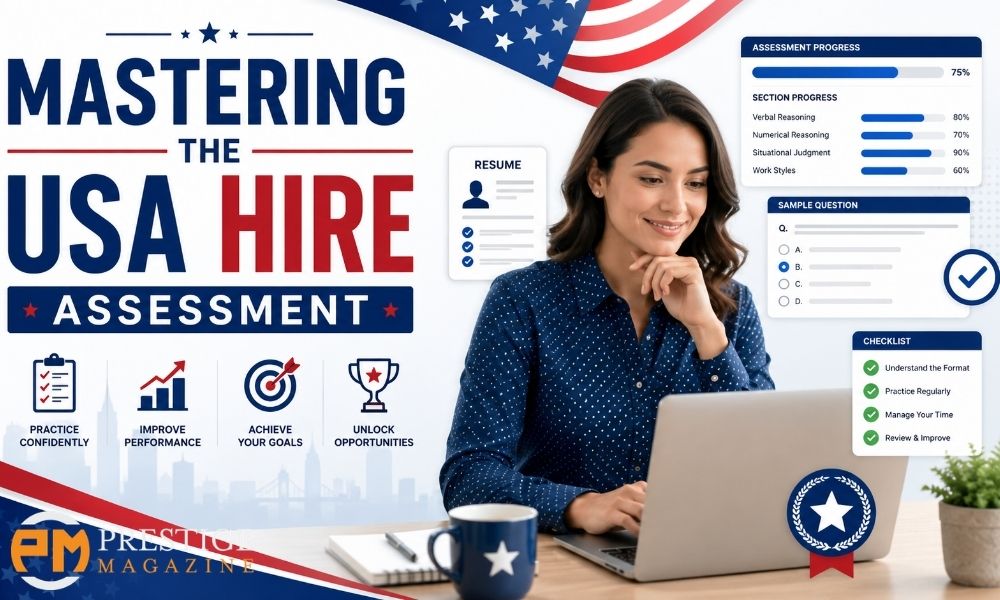
Mastering the USA Hire Assessment is an important step for many applicants who want to build a career in the U.S. federal government. The USA Hire system is used by federal agencies to evaluate job-related skills through online assessments, and the official U.S. Office of Personnel Management describes it as a platform designed to provide fair, valid, and reliable skills-based assessments for federal hiring. For applicants, this means the test is not just a simple formality. It can influence whether your application moves forward, so understanding the process, preparing properly, and avoiding common mistakes can make a real difference.
What Is the USA Hire Assessment?
The USA Hire Assessment is an online testing process used for many federal job applications. After applying for a position on USAJOBS, some applicants receive an email asking them to complete one or more USA Hire assessments. These assessments are designed to measure abilities, judgment, reasoning, reading comprehension, math skills, workplace behavior, and other competencies related to the job.
The exact assessment you receive depends on the position, agency, grade level, and job series. Some applicants may only complete a few sections, while others may receive multiple parts. The goal is to help hiring agencies compare candidates using more than just resumes and self-rated questionnaires.
Unlike a normal job application, the USA Hire Assessment asks you to demonstrate how you think, solve problems, and respond to workplace situations. That is why preparation matters.
Why Mastering the USA Hire Assessment Matters
Mastering the USA Hire Assessment matters because federal hiring is competitive. Many government jobs receive hundreds or even thousands of applications. A strong resume is important, but assessments can play a major role in deciding who moves forward.
If you rush through the assessment or misunderstand the instructions, you may hurt your chances. On the other hand, if you prepare carefully, understand the format, and manage your time well, you can perform with more confidence.
The assessment is not about memorizing answers. It is about showing that you have the thinking skills, judgment, and professional behavior needed for the job. That means the best preparation is practical, honest, and strategic.
Common Types of USA Hire Assessments
USA Hire assessments can include several different types of tests. Not every applicant receives the same ones, but many assessments fall into common categories.
Occupational Reasoning Assessment
This section measures your ability to analyze information, identify patterns, and solve problems. You may be asked to review written information, compare details, or make logical conclusions.
To prepare for this section, practice reading carefully and avoiding assumptions. Many reasoning questions are designed to test whether you can separate facts from distractions.
Occupational Judgment Assessment
This section presents workplace scenarios and asks how you would respond. You may need to choose the most effective and least effective actions.
The key is to think like a professional federal employee. Good answers usually show integrity, responsibility, teamwork, communication, customer service, and respect for rules.
Occupational Reading Assessment
This section tests reading comprehension. You may read passages and answer questions about main ideas, details, tone, or conclusions.
To do well, slow down and focus on the actual text. Do not answer based on outside knowledge unless the question clearly asks for it.
Occupational Math Assessment
Some jobs include math-related questions. These may involve basic arithmetic, percentages, charts, tables, or workplace calculations.
You do not need to panic if math is not your strongest area. Practice common calculations, read each question carefully, and double-check your work.
Occupational Interaction Assessment
This section may measure how you interact with others in workplace situations. It can include questions about teamwork, conflict, communication, and professionalism.
The best approach is to stay consistent and choose answers that show maturity, respect, and good judgment.
How the USA Hire Assessment Process Works
The process usually begins after you submit an application for a federal job. If the job requires USA Hire, eligible applicants may receive an email with assessment instructions. This email often includes a deadline, login details, and information about the required assessments.
You must complete the assessment before the deadline. Missing the deadline can remove you from consideration for that job. That is why checking your email is extremely important after applying.
Applicants should also check spam or junk folders. Assessment emails may come from an official USA Hire or OPM-related email address. If you apply for multiple federal jobs, keep track of each application and deadline.
Read the Job Announcement Carefully
One of the most important steps in Mastering the USA Hire Assessment happens before you even start the test: reading the job announcement.
The announcement tells you what the agency is looking for. Pay attention to these sections:
Duties
This section explains the actual work. It helps you understand what skills the assessment may focus on.
Qualifications
This section explains the required experience, education, and specialized skills.
How You Will Be Evaluated
This section is very important. It may mention competencies, assessments, questionnaires, or rating factors.
Required Documents
If you miss required documents, your assessment performance may not matter because your application could still be considered incomplete.
Reading the announcement carefully helps you prepare with the right mindset.
Prepare Before You Start
Do not open the assessment when you are tired, distracted, or rushed. Many applicants make the mistake of starting late at night, during work breaks, or while multitasking.
Before beginning, make sure you have:
A quiet place to work
A stable internet connection
Enough time to finish
A calculator if allowed
Scratch paper if permitted
A clear understanding of the deadline
You should also close unnecessary browser tabs and silence notifications. The more focused you are, the better you can think.
Practice With Similar Question Types
You may not know the exact questions before the assessment, but you can still practice similar skills. Practice reading comprehension, basic workplace math, logical reasoning, and situational judgment.
For reading questions, practice summarizing paragraphs and identifying key details. For reasoning questions, practice pattern recognition and logic puzzles. For math questions, review percentages, averages, ratios, and table interpretation.
For judgment questions, think about professional behavior. In most workplace scenarios, the best answer is rarely emotional, careless, dishonest, or extreme. Strong answers usually involve communication, following policy, solving problems, and escalating issues when appropriate.
Understand Situational Judgment Questions
Situational judgment questions can feel tricky because several answers may seem reasonable. These questions often ask what you are most likely or least likely to do.
When answering, think about workplace values. A strong federal employee should be reliable, ethical, respectful, calm, and solution-focused.
Avoid answers that show:
Ignoring the problem
Blaming others immediately
Breaking rules
Acting without enough information
Responding emotionally
Avoiding responsibility
Sharing confidential information
Better answers usually show:
Gathering facts
Communicating professionally
Following procedures
Helping the team
Protecting public trust
Escalating serious issues properly
Manage Your Time Wisely
Time management is one of the biggest challenges in the USA Hire Assessment. Some sections may be timed, and even when you have enough time overall, you still need to pace yourself.
Do not spend too long on one question. If you are stuck, make your best choice and move forward. It is better to answer all questions than to lose time trying to perfect one difficult item.
For reading sections, read the question first if that helps you know what to look for. For math sections, write down key numbers and avoid mental overload. For judgment sections, trust professional common sense.
Be Honest and Consistent
Some assessment questions may measure personality, work style, or behavior. These questions are not always about choosing the most impressive answer. They may be designed to see whether your responses are consistent.
Do not try to “game” the system by pretending to be perfect. Extreme answers can sometimes seem unrealistic. Instead, answer honestly while keeping professional standards in mind.
Federal agencies want dependable workers, not people who simply choose what sounds ideal. Honesty and consistency are important.
Avoid Common Mistakes
Many applicants hurt their chances because of simple mistakes. These mistakes are avoidable if you prepare carefully.
One major mistake is waiting until the last minute. If your internet fails or you misunderstand the deadline, you may lose the opportunity.
Another mistake is rushing through instructions. Each section may have different rules, so read carefully before answering.
A third mistake is treating the assessment like a casual quiz. It is part of the hiring process and should be taken seriously.
Applicants also make mistakes by overthinking every question. Preparation is important, but panic can lead to poor choices. Stay calm and focused.
Improve Your Reading Skills
Reading is a key part of many USA Hire assessments. Even math and judgment questions require careful reading.
To improve, practice reading short passages and identifying the main point. Ask yourself:
What is the passage really saying?
What details support the answer?
Which answer is directly supported by the text?
Which answer sounds true but is not actually stated?
Many wrong answers are designed to seem reasonable. Your job is to choose the answer supported by the information given.
Strengthen Your Math Confidence
If your assessment includes math, focus on practical workplace math. Review percentages, basic algebra, averages, fractions, ratios, and chart reading.
Do not let math anxiety control you. Many questions test careful thinking more than advanced formulas. Read the problem slowly, identify what is being asked, and solve step by step.
For example, if a question includes a table, make sure you are reading the correct row and column. Many mistakes happen because applicants use the wrong number.
Build Logical Reasoning Skills
Logical reasoning questions test your ability to think clearly. You may need to compare statements, identify conclusions, or find patterns.
To improve, practice with logic questions and analytical reading. Focus on evidence. Do not assume information that is not given.
A good habit is to ask, “What must be true based on the information provided?” This helps you avoid emotional or unsupported answers.
Create a Test-Day Strategy
A strong test-day strategy can improve your performance. Before starting, take a few minutes to relax. Read all instructions carefully. Know whether you can go back to previous questions or not.
During the test, stay steady. If a question feels confusing, break it into smaller parts. For scenario questions, identify the problem, the people involved, and the most professional response.
After each section, mentally reset. Do not worry about past questions. Focus on the next one.
What Not to Do During the Assessment
Do not search for answer keys or cheat sheets. The assessment is meant to evaluate your own skills. Trying to use dishonest methods can damage your application and your professional reputation.
Do not ask someone else to take the assessment for you. This is unethical and can have serious consequences.
Do not rush just to finish quickly. Accuracy matters. Move at a steady pace, but stay careful.
Do not ignore technical instructions. Use the recommended browser if provided and make sure your device works properly.
How to Stay Calm During the Assessment
Stress can make even simple questions feel difficult. To stay calm, prepare your environment before starting. Take slow breaths if you feel tense. Remind yourself that one difficult question does not ruin the whole assessment.
Confidence comes from preparation. If you have practiced reading, reasoning, math, and judgment questions, you will feel more ready.
Also remember that the assessment is only one part of the hiring process. Do your best, but do not let fear control your performance.
After Completing the Assessment
After you finish, follow any instructions on the screen. Save confirmation messages if available. Keep an eye on your email and USAJOBS account for status updates.
Federal hiring can take time. Do not panic if you do not hear back immediately. Agencies often review applications, assessment results, eligibility, veterans’ preference, qualifications, and other factors before making decisions.
You can continue applying for other federal jobs while waiting.
Can You Retake the USA Hire Assessment?
Retake rules can vary depending on the assessment and agency process. In some cases, scores may be reused for a period of time when you apply for similar jobs. This is why it is important to take the assessment seriously the first time.
Before starting, read the instructions carefully so you understand how your results may be used. If you have questions, check the official assessment email or applicant support resources.
Mastering the USA Hire Assessment Through Smart Preparation
Mastering the USA Hire Assessment is not about memorizing secret answers. It is about understanding the format, practicing the right skills, and approaching the test with a professional mindset.
The strongest applicants prepare early, read instructions carefully, manage their time, and answer honestly. They understand that the assessment is designed to measure job-related abilities, not trick them personally.
If you treat the assessment as an important part of your federal job journey, you can approach it with confidence and improve your chances of moving forward.
Final Thoughts on Mastering the USA Hire Assessment
Mastering the USA Hire Assessment can help you feel more confident when applying for federal jobs. The process may seem stressful at first, but it becomes easier to understand when you know what to expect.
Focus on reading carefully, practicing reasoning, reviewing basic math, and thinking through workplace judgment scenarios. Prepare your environment, watch your deadlines, and take the test seriously.
Federal hiring can be competitive, but preparation gives you an advantage. With patience, honesty, and smart strategy, you can approach the USA Hire Assessment with a stronger mindset and a better chance of success.
FAQs About Mastering the USA Hire Assessment
What is the USA Hire Assessment?
The USA Hire Assessment is an online testing process used by federal agencies to measure job-related skills, reasoning, judgment, reading ability, and other competencies.
Why do I need to take the USA Hire Assessment?
You may need to take it because the federal job you applied for requires additional assessment beyond your resume and application questionnaire.
Is the USA Hire Assessment hard?
The difficulty depends on the job and the assessments assigned. It can feel challenging, but preparation can make it much easier to manage.
How can I prepare for the USA Hire Assessment?
You can prepare by practicing reading comprehension, logical reasoning, workplace judgment, basic math, and time management.
Does every federal job require USA Hire?
No, not every federal job uses USA Hire. Agencies decide which positions require assessments.
Can I retake the USA Hire Assessment?
Retake rules vary depending on the assessment and hiring process. Some scores may be reused for a period of time, so take the test seriously.
What happens if I miss the assessment deadline?
If you miss the deadline, you may be removed from consideration for that job.
Are USA Hire questions the same for every applicant?
Not always. Assessments can vary by job series, grade level, agency, and position requirements.
Should I guess if I do not know an answer?
If you are stuck, it is usually better to make your best informed choice than to leave a question unanswered, especially if time is limited.
What is the best tip for Mastering the USA Hire Assessment?
The best tip is to prepare early, read every instruction carefully, stay calm, and answer with professional judgment.
Visit for more info: prestigemagazine.co.uk
BUSINESS
Who Is Heidi Van Pelt? The Former Wife of Taran Noah Smith and Entrepreneur Behind a Controversial Love Story



Noelle Inguagiato: Inside the Private Life of Jesse Watters’ Ex-Wife and Former Fox Fashion Host

Frankie Elle Rodriguez: The Private Life and Family Story of Adam Rodriguez’s Eldest Daughter

Danielle Vangar: The Private Woman Known for Her Marriage to Carmine Agnello

Who Is Jamie Hartwright? The Private Daughter of Judge Judy Who Chose Family Over Fame

Who Is Brandy Quaid? The Private Name Linked to the Famous Quaid Family

Who Is Dr. Doug Weiss? CelebrityDr. Doug Weiss Net Worth, Career, Marriage, and Public Life
-
 CELEBRITY5 months ago
Who Is Jamie Hartwright? The Private Daughter of Judge Judy Who Chose Family Over Fame
-
 CELEBRITY5 months ago
Who Is Brandy Quaid? The Private Name Linked to the Famous Quaid Family
-
 CELEBRITY5 months ago
Who Is Dr. Doug Weiss? CelebrityDr. Doug Weiss Net Worth, Career, Marriage, and Public Life
-

 CELEBRITY5 months ago
Who Is Mary Ryan Ravenel? The Private Woman Behind Thomas Ravenel’s First Marriage
-

 CELEBRITY4 months ago
Who Is Ashen Josan Page? The Private Son of Led Zeppelin Legend Jimmy Page
-

 CELEBRITY4 months ago
Who Is Elias Gene D’Onofrio? The Private Son of Vincent D’Onofrio
-

 CELEBRITY4 months ago
Who Is Andrew Shingange? The Private Brother Behind Trevor Noah’s Powerful Family Story
-

 CELEBRITY5 months ago
Who Is Katherine Clark Scarborough? The Private Daughter of Joe Scarborough